



A hands free dog leash for running sits around your waist or across your body, so your arms can swing naturally while your dog stays close. To start running with your dog, confirm with your vet that they are ready, practice on quiet routes, begin with short walk-run intervals, and build distance slowly while watching the heat.
Key takeaways
- Check with your veterinarian before running with a puppy, a senior dog or a dog with any health concern.
- Choose a leash you can wear securely, with a handle close to the clip for quick control at crossings.
- Start with short run-walk intervals and add distance gradually over several weeks.
- Run in the cooler parts of the day and stop at the first sign your dog is struggling with heat.
In this guide
Is your dog ready to run with you?
Not every dog is built for the same kind of exercise, and running with your dog works best when it suits their age, size and health. A short conversation with your veterinarian is the right first step, especially if your dog is still growing, is getting older, or carries extra weight.
Puppies and senior dogs
Young dogs are still developing, and repetitive running on hard surfaces is generally not recommended until they have finished growing. That point varies by breed, and large and giant breeds tend to mature later. Senior dogs can often still enjoy gentle jogging, but they may need shorter sessions and more rest. Ask your vet what is sensible for your individual dog before you begin.
Breed and body type
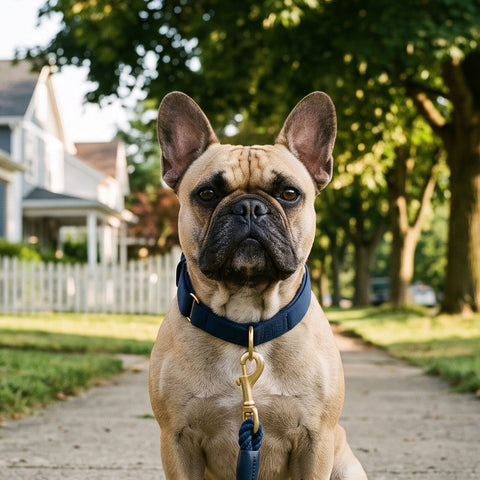
Flat-faced breeds such as Pugs and Bulldogs can find it harder to cool down and to breathe during sustained effort. If your dog is not a natural runner, a brisk walk is still valuable exercise.
Leash manners come first
A dog who already walks calmly beside you will adapt to running far more easily. Before you add speed, practice a consistent side, a loose leash and simple cues such as "wait" and "leave it" on ordinary walks.
What to look for in a hands free dog leash for running
The best running setup keeps your dog close and under control without asking you to hold anything. A few details make a noticeable difference once you are moving:
- How it is worn: around the waist or crossbody, so the pull lands on your core rather than your wrist.
- A second handle near the clip: lets you bring your dog to your side quickly when a cyclist passes or you reach a road.
- A secure clip: a locking or reinforced clasp that you can check before every run.
- Shock absorption: a bungee section softens sudden pulls, which some runners prefer with an energetic dog.
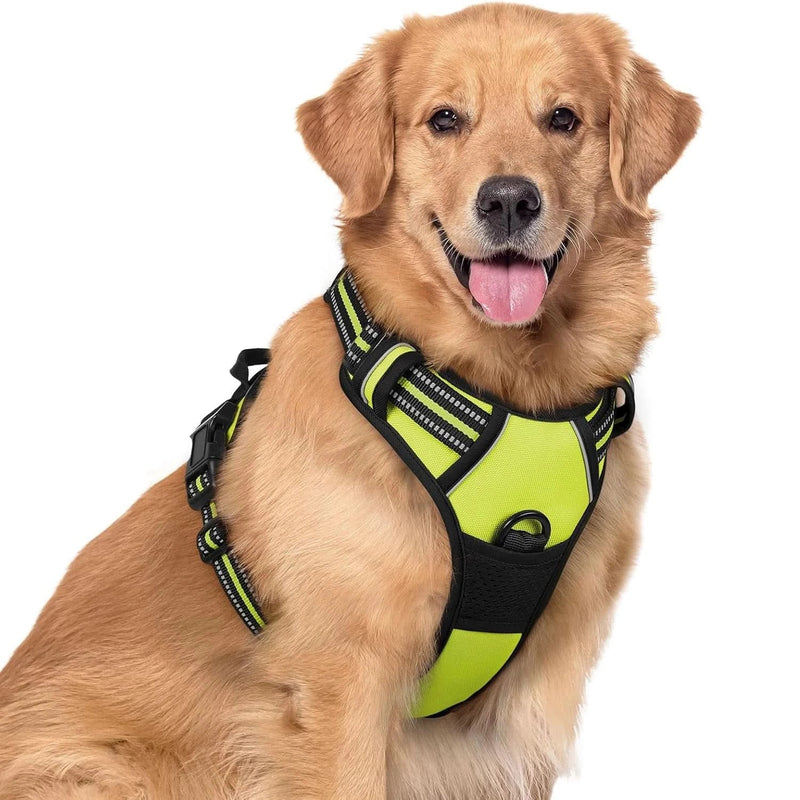
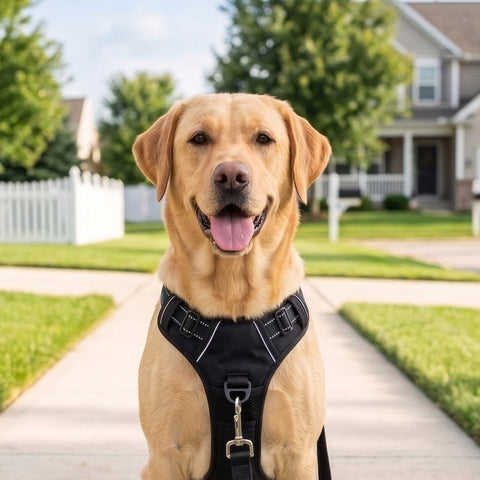
- Harness or collar: for a dog that pulls, a well-fitted front clip harness is usually a better choice than a collar.
Noblias offers two hands free styles, and they suit slightly different runners.
| Feature | Hands Free Dog Leash | Hands Free Bungee Dog Leash |
|---|---|---|
| How it is worn | Rope loops around the waist, over the shoulder or in the hand | Clips to an adjustable waist belt |
| Length | 170 cm (67 in) | 4 ft at rest, stretches to 5 ft |
| Shock absorption | None; a pull comes straight through | Bungee section absorbs sudden pulls |
| Control handle | Padded grip near the clip | Two padded neoprene handles |
| Best suited to | Steady dogs, easy jogs and everyday walks | Medium to large dogs and regular runs |

Hands Free Dog Leash for Walking and Running
A double nylon rope with a locking 360 degree swivel clip and a sliding stopper that sets the loop to your hand, waist or shoulder.

Hands Free Bungee Dog Leash with Waist Belt
A shock-absorbing bungee that stretches from 4 to 5 feet, clipped to an adjustable waist belt with reflective stitching.
How to start running with a dog
Once you have a hands free dog leash for running, the first few weeks are about building habits, not fitness. Keep sessions short and positive so your dog learns that running beside you is calm and predictable.
- Practice hands free on a walk. Wear the leash on a quiet route first, so you both get used to the feel before you add pace.
- Warm up with a walk. Five to ten minutes of walking lets your dog sniff, relieve themselves and settle.
- Use run-walk intervals. Alternate a minute or two of easy jogging with a few minutes of walking.
- Keep your dog on one side. A consistent side reduces weaving and tangles.
- Choose forgiving surfaces. Grass, packed dirt and trails are kinder to paws than hot or rough pavement.
- Cool down and check paws. Finish with a walk, offer water, and look over the pads for cuts or wear.
Keep a hand near the control handle whenever you approach traffic, other dogs or a busy path.
How to build up distance gradually
Dogs are often eager to keep going long after their muscles, joints and paw pads are ready, so their enthusiasm is not a reliable guide. Increase time or distance in small steps and hold at each level until your dog finishes comfortably.
- Add a few minutes of running at a time, rather than jumping to a new route or pace.
- Build in rest days between runs, especially in the early weeks.
- Keep most runs at a relaxed pace where your dog can trot rather than sprint.
- Ease back if your dog seems stiff, sore or reluctant the next day.
Watch for signs that it is time to slow down or stop: lagging behind, heavy panting that does not ease, limping, or lying down on the route. When in doubt, walk home.
Running in warm weather and other safety checks
Dogs cool themselves mainly by panting, which is far less efficient than sweating. On warm or humid days they can overheat quickly, even on a run that feels easy to you.
- Run early in the morning or later in the evening when it is cooler.
- Test the ground with the back of your hand. If it is too hot to hold there comfortably, it is too hot for paws.
- Carry water for your dog and offer small drinks during breaks.
- Shorten the run or switch to a shaded walk on hot days.
Stop immediately if your dog shows heavy panting, drooling, weakness, stumbling or confusion. Move them into shade, offer water and contact your veterinarian right away, as overheating can become serious quickly. Always check with your vet before starting a running routine with a puppy, a senior dog or a dog with a health condition.
For longer outings, pack a few essentials such as water and waste bags. You can find more gear for days out in our Travel & Outdoor collection.
Frequently asked questions
How old should a dog be before running with you?
Most vets suggest waiting until a dog has finished growing before regular running, and that age varies by breed. Large and giant breeds usually mature later than small ones. Until then, stick to walks and free play, and ask your veterinarian when your dog is ready to start short, gentle jogs.
Is a hands free leash safe for a dog that pulls?
It can be, with care. Because the leash is attached to your body, a strong pull can throw you off balance. Train loose-leash walking first, use a front clip harness rather than a collar, practice on quiet routes, and keep a hand on the control handle near traffic or other dogs.
Should my dog wear a harness or a collar for running?
A well-fitted harness is usually the better choice for running, because it spreads pressure across the chest rather than the neck. A front clip harness can also help with dogs that pull. Make sure it does not rub behind the front legs, and check the fit again after the first few runs.
How far can I run with my dog?
It depends on your dog's age, breed, fitness and the weather. Start with short run-walk intervals and increase distance in small steps over several weeks. Your dog should finish relaxed and move normally the next day. If they seem sore or reluctant, reduce the distance and check with your vet.
How hot is too hot to run with a dog?
There is no single safe number, because humidity, sun, breed and fitness all matter. As a practical rule, if it feels warm to you or the pavement is too hot for the back of your hand, skip the run. Choose a cooler time of day or a short, shaded walk instead.
Ready for your first run together?
Explore leashes designed to keep your hands free and your dog close.