

If your dog eats too fast, slow mealtimes down by serving food in a slow feeder or lick bowl, splitting the daily ration into two or three smaller meals, and feeding each dog in its own quiet space. Gulping can lead to vomiting or choking, and eating quickly is listed as a risk factor for bloat.
Key takeaways
- Most fast eaters respond to a combination of changes: a slower bowl, smaller meals and a calm, separate place to eat.
- Introduce any new bowl at a normal mealtime, not when your dog is very hungry, so it feels like a puzzle rather than a barrier.
- Large, deep-chested breeds are at higher risk of bloat. Know the warning signs, because bloat is an emergency.
In this guide
Why do some dogs eat so fast?
Fast eating is usually a habit rather than a sign that something is wrong. Dogs that grew up competing with littermates for food, dogs that share a home with other pets, and dogs fed one large meal a day often learn to eat as quickly as they can. Some dogs are simply very food-motivated.
A change is different. If a dog that used to eat at a steady pace suddenly starts wolfing food, seems hungry all the time or begins losing weight, mention it to your veterinarian, since changes in appetite can have medical causes.
Why gulping food can be a problem
Swallowing a meal in a few seconds means swallowing air with it, and not chewing much along the way. That can lead to:
- Vomiting or bringing food back up shortly after the meal
- Coughing, gagging or choking on kibble that goes down too quickly
- Discomfort and gassiness from the extra air in the stomach
- A higher risk of bloat in susceptible dogs. Veterinary groups including the American Animal Hospital Association list eating quickly and eating only one large meal a day among the risk factors for gastric dilatation-volvulus, or GDV.
Not every fast eater will have problems, and a slower bowl cannot rule any of them out. Still, slowing things down is a simple, low-risk change for most dogs.
How to slow down a fast eater, step by step
- Measure the daily ration. Use a measuring cup or kitchen scale and the amount recommended on the food label or by your veterinarian, adjusted for your dog's weight and activity. Count treats as part of the day's food.
- Split it into smaller meals. Two or three meals spread through the day are easier to eat calmly than one large one.
- Keep a regular schedule. Feeding at predictable times can take some of the urgency out of meals for dogs that worry about where the next one is coming from.
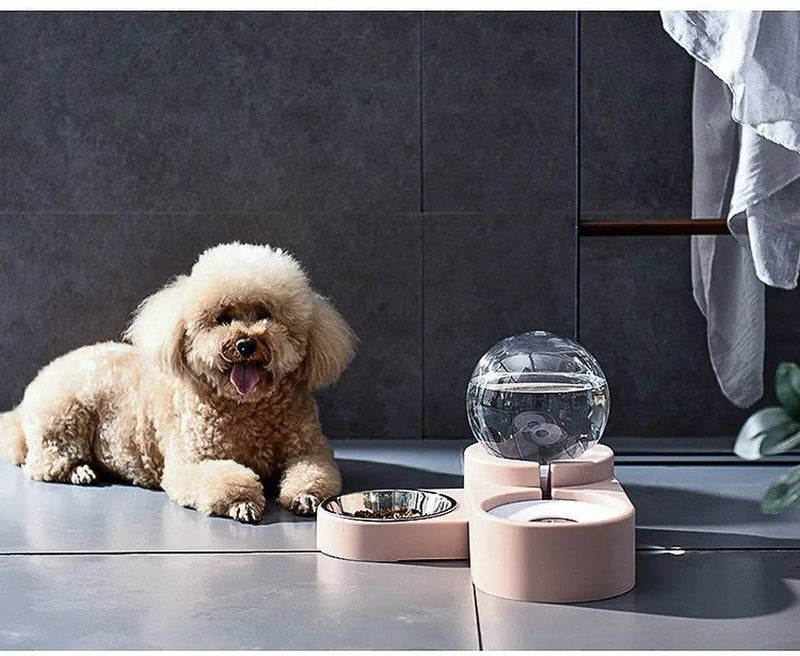
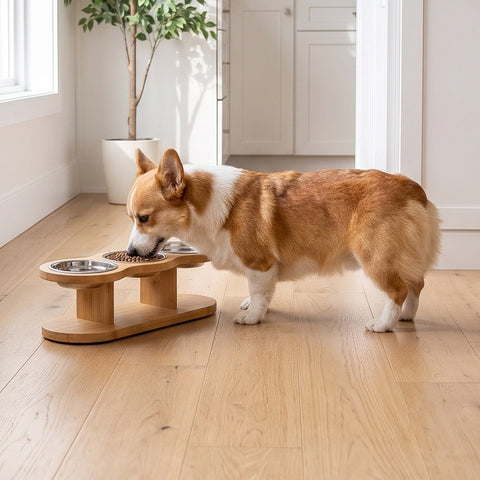
- Switch to a slow feeder. Raised sections or cells break the meal into small portions so your dog has to work around them rather than taking huge mouthfuls.
- Introduce it gradually. Start at a normal mealtime and stay nearby for the first few meals. If your dog gets frustrated, put a little food on top of the cells so early success comes easily.
- Try easy home methods too. Spreading kibble across a clean baking sheet or a muffin tin, or hand-feeding part of a meal during a short training session, also slows the pace.
- Keep things calm afterward. Save vigorous play and hard exercise for later. For dogs at risk of bloat, veterinary guidance suggests avoiding strenuous activity for about two hours after meals.
Slow feeder bowl or lick bowl?
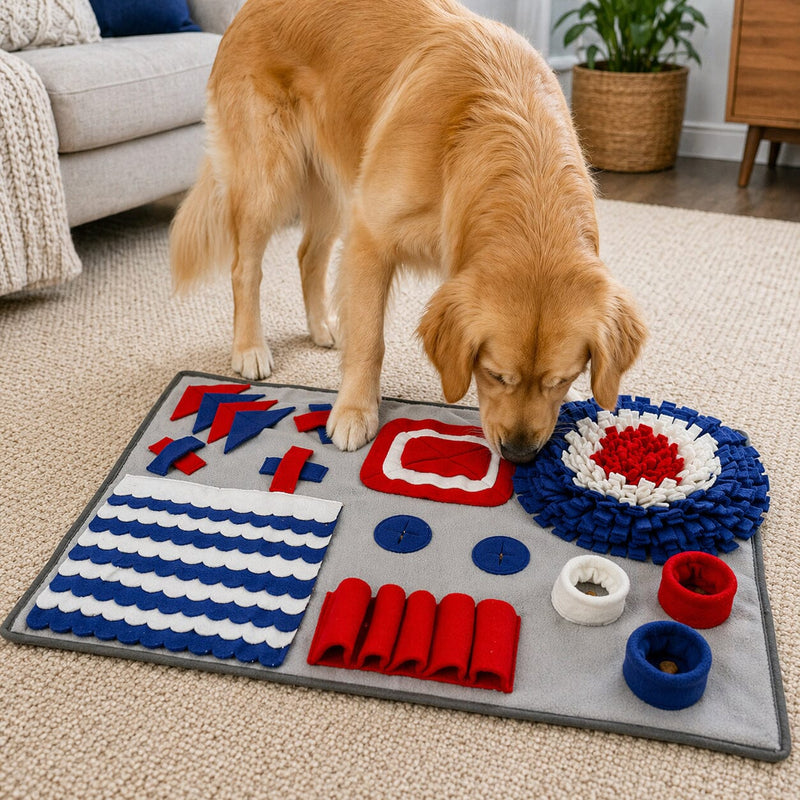
Both slow a dog down, but they suit different kinds of food. The comparison below focuses on the fast-eating problem. For a wider look at enrichment feeders, including snuffle mats, see our slow feeder, lick mat and snuffle mat guide.
| Feature | Slow feeder bowl | Lick bowl |
|---|---|---|
| How it slows eating | Raised walls or cells limit each mouthful | Licking takes longer than biting and swallowing |
| Best for | Everyday meals of kibble or wet food | Wet food, broth, yogurt and soft treats |
| Typical use | Main bowl for fast eaters | Part of a meal, or a calm activity between meals |
| Good to know | Choose a size that holds a full portion | Not suited to dry kibble on its own |
For most fast eaters, a slow feeder works as the everyday dinner bowl, with a lick bowl for wet food portions or treats.

Honeycomb Slow Feeder Dog Bowl for Small and Medium Dogs
Raised hexagonal cells split a 16 cm (6.3 in) bowl into separate pockets for kibble, wet, raw or fresh food, on a non-slip base that is top-rack dishwasher safe.
At 16 cm across, this bowl holds a full meal for a small or medium dog. For a large breed, it works better as a treat and enrichment bowl than as the everyday dinner bowl, so choose a bigger slow feeder for main meals.

Slow Feeder Dog Lick Bowl with Rolling Ball
A food-grade silicone ball rolls in a recessed ring as your dog licks, while the lower center and raised rim keep broth, yogurt and wet food inside the bowl.
The lick bowl measures 15.6 by 16 by 6.5 cm (6.3 by 6.14 by 2.56 in), suits small and medium dogs, and is freezer safe, so a portion of wet food can be frozen on the ball to make it last longer. Wash it in warm water with mild soap.
Feeding a fast eater in a multi-dog home
Competition is one of the most common reasons dogs gulp. When another dog is nearby, eating fast can feel like the only way to keep the meal. These habits help:
- Feed dogs apart. Use separate rooms, crates or baby gates so each dog can eat without watching the others.
- Serve meals at the same time. This keeps a quick finisher from waiting to raid a slower dog's bowl.
- Pick up bowls afterward. Remove empty and unfinished bowls once mealtime ends so there is nothing left to compete over.
- Give each dog a suitable bowl. The fast eater can use a slow feeder while a relaxed eater keeps a regular bowl.
If one dog guards food or growls near bowls, keep them fully separated at meals and ask a qualified trainer or behavior professional for help.
Bloat warning signs in deep-chested breeds
Gastric dilatation-volvulus happens when the stomach fills with gas and can twist. Large, deep-chested breeds carry the highest risk, including Great Danes, Standard Poodles, German Shepherds, Weimaraners, Irish and Gordon Setters, Doberman Pinschers, Boxers and Saint Bernards. Older dogs and anxious dogs are also considered at higher risk.
Bloat is a veterinary emergency. Go to your veterinarian or nearest emergency clinic straight away if your dog is restless or pacing, retches without bringing anything up, drools heavily, has a swollen or tight belly, shows pale gums, or seems weak or collapses. Do not wait to see if it settles. If you own a high-risk breed, ask your veterinarian about prevention options.
Frequently asked questions
How do I know if my dog is eating too fast?
Common signs include finishing a meal in seconds, coughing or gagging while eating, and bringing food back up soon afterward. Some dogs also burp, hiccup or look uncomfortable after meals. If you notice these regularly, it is worth changing how you feed.
Do slow feeder bowls really work?
For many dogs, yes. The raised sections limit how much food can be taken in one mouthful, so the meal lasts longer. Results vary with the dog and the bowl design, and they work best alongside smaller meals and a calm feeding space.
Can a slow feeder frustrate my dog?
Some dogs find a new bowl frustrating at first and may push it around. Introduce it at a normal mealtime rather than when your dog is very hungry, start with food sitting on top of the cells, and stay nearby for the first few meals.
Can I feed a full meal in a lick bowl?
A lick bowl suits wet food and soft foods, so it can hold part or all of a wet meal for a small dog. It does not work well for dry kibble on its own. Many owners use it alongside a slow feeder rather than as a replacement.
Does a slow feeder prevent bloat?
No bowl can promise that. Slowing down eating and splitting food into smaller meals are among the steps veterinary groups suggest for reducing risk. If you own a large, deep-chested breed, discuss bloat prevention with your veterinarian and learn the warning signs.
Make mealtimes last longer
Explore slow feeders and lick bowls that help fast eaters take their time.