

Knowing how to choose a dog bed comes down to size, sleeping style and care. Measure your dog, watch how they sleep, and match the bed to both: curlers settle in a round donut bed, sprawlers need a large flat bed, and warm sleepers suit a cooling surface. Then check for a washable cover.
Key takeaways
- Measure your dog in the position they usually sleep in, and size up if they fall between two sizes.
- Sleeping style matters as much as size: curlers, sprawlers and leaners each suit a different shape.
- A removable, machine washable cover makes a bed far easier to keep fresh.
- Older and larger dogs benefit from supportive foam and an easy, low entry.
In this guide
How do you measure your dog for a bed?
Size is the first step in how to choose a dog bed, because a bed that is too small is a common reason a dog ignores it and sleeps on the floor or the sofa instead.
- Watch first. Note whether your dog usually sleeps curled in a ball or stretched out on their side.
- Measure in that position. For a sprawler, measure from the tip of the nose to the base of the tail while they lie stretched out. For a curler, measure the widest point of the curled shape.
- Add room to spare. Allow several extra inches so paws and head are not hanging over the edge.
- Check the weight guide. Heavier dogs need a bed rated for their weight, not just their length.
- Size up when in doubt. If your dog falls between two sizes, the larger one is almost always the better choice.
Remember that raised sides and bolsters take up part of the outer measurement, so compare your dog's size with the inner sleeping area where a size chart shows it.
Match the bed to how your dog sleeps
Most dogs have a favorite sleeping position, and the right shape of bed supports it. This quick comparison is a good starting point when you are learning how to choose a dog bed for your own dog.
| Bed type | Best for (sleeping style) | What to check |
|---|---|---|
| Round donut bed | Curlers who tuck their nose to their tail | Room to curl inside the raised edge |
| Round bolster bed | Leaners who like to rest their head on an edge | Rim height and a non-slip base |
| Flat mat or cooling pad | Sprawlers and dogs that sleep warm | Length measured fully stretched out |
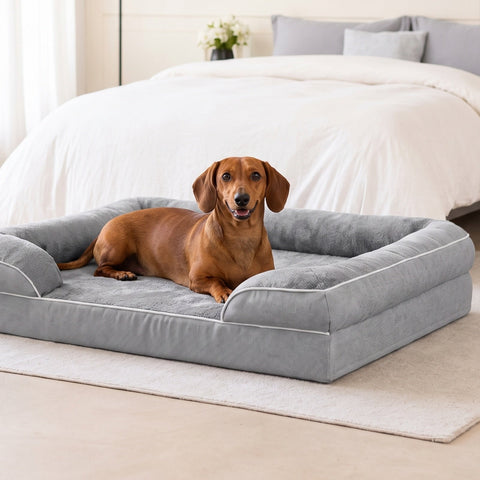
| Layered foam bed with bolsters | Large, heavy dogs that like support and a wall | Foam depth and the sleeping area size |
| Enclosed bed with sides all around | Small dogs and cats that like to feel tucked in | A few inches of spare length |
Curlers
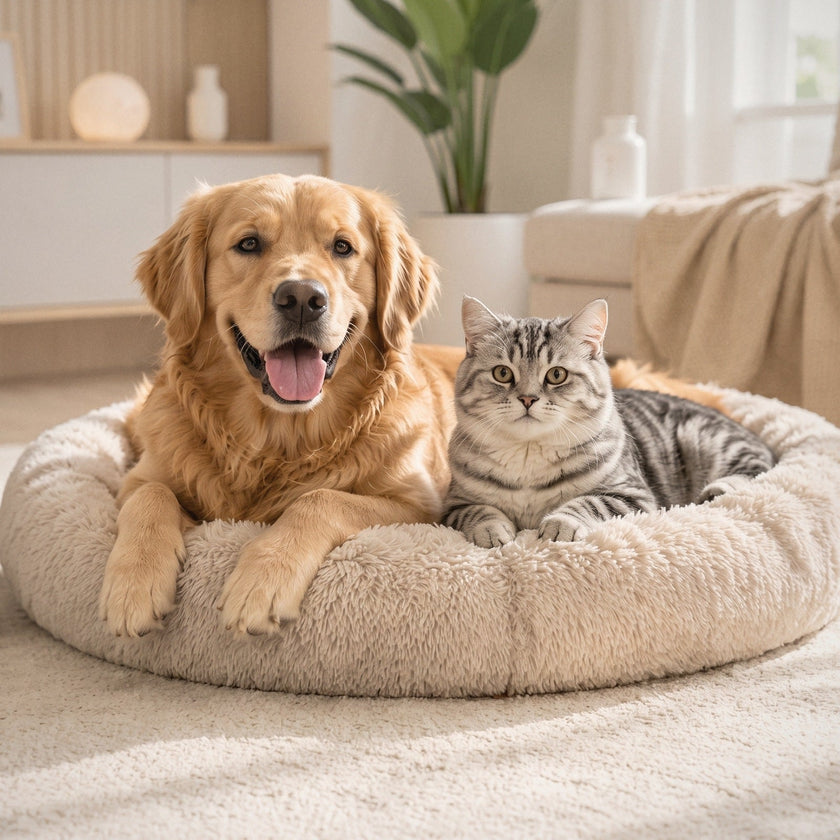
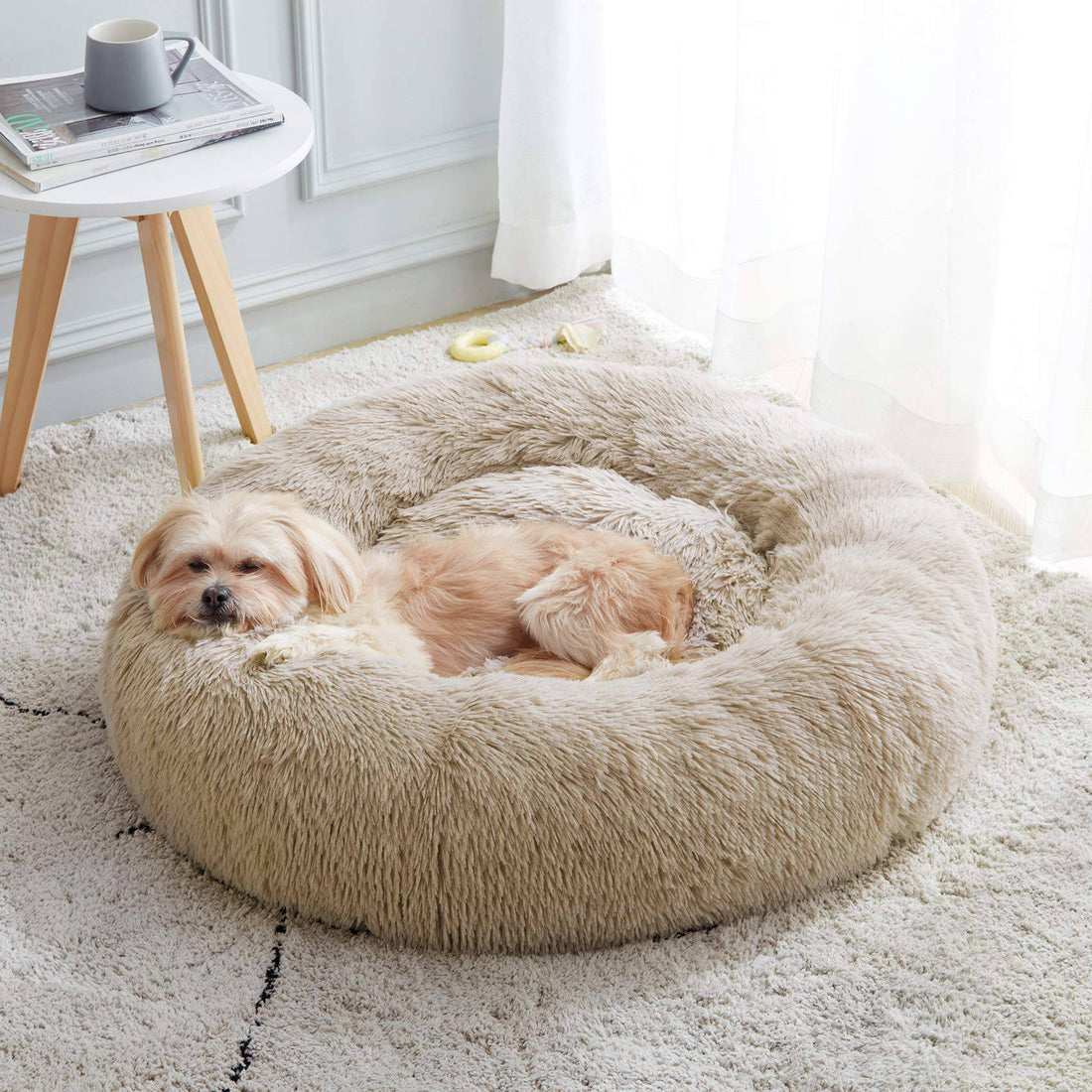
Dogs that circle before lying down and tuck into a ball often look for something to press their back against. A donut bed gives them a soft wall the whole way around. These beds are often called calming donut dog beds, although that describes the cozy, enclosed feel rather than any effect on behavior.
Sprawlers
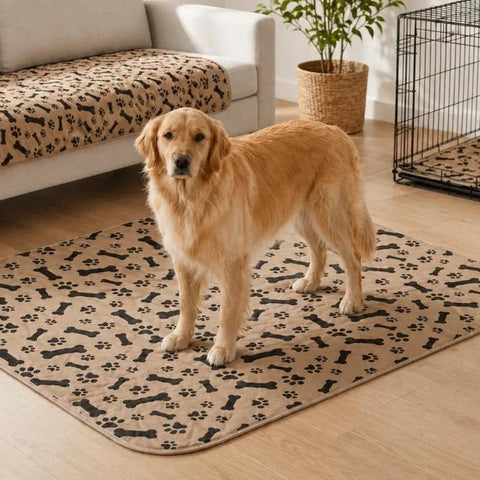
Dogs that sleep flat on their side with legs stretched out need length more than walls. A flat mat or an open rectangular bed gives them room to stretch.
Leaners
If your dog rests their chin on the arm of the sofa or against your leg, a bed with a raised bolster offers the same kind of headrest.

Cloud Shaped Donut Bed for Dogs and Cats
A raised edge runs the whole way around and doubles as a pillow, over a PP cotton fill that sinks under a curled-up body while the edge keeps its shape.
What is the best dog bed for large dogs?
The best dog bed for large dogs is one that fits their full stretched-out length and does not flatten under their weight. A big dog on a thin cushion ends up lying on the floor beneath it.
- Supportive fill: dense or layered foam holds its shape better under a heavy dog than loose fiber alone.
- Generous dimensions: large breeds often sprawl, so size for length rather than a curled shape.
- A stated weight guide: check that the bed is rated for your dog's weight.
- Non-slip base: stops the bed sliding when a heavy dog steps on or off.
- Easy access: a low, flat entry is easier for big dogs than climbing over a high rim.
Does your dog need a cooling dog bed?
If your dog leaves their bed on warm nights to lie on tile or a bare floor, they may be looking for a cooler surface. Thick-coated breeds, larger dogs and dogs in warm climates often prefer a bed that does not hold heat.
A cooling dog bed usually combines a cool-touch cover with a fill that lets air move, such as egg crate foam, as in our Cooling Dog Bed with Egg Crate Foam. Flat designs help too, with no walls trapping warmth. Keep the bed out of direct sun and away from heaters, and always make sure your dog has access to fresh water and shade.
Why a washable cover matters
Dog beds collect hair, dirt, drool and odor quickly. A cover you can remove and put in the washing machine keeps the bed fresh without having to replace it.
- Look for a full zip that lets the cover come off easily, ideally without wrestling the fill out.
- Check the care instructions for water temperature and whether the cover can be tumble dried.
- A waterproof liner under the cover protects the fill from spills and accidents.
- Make sure the cover and fill are completely dry before your dog uses the bed again.
Choosing a bed for an older dog
As dogs age, many become stiffer after rest and slower to settle. The right bed can make lying down and getting up more comfortable, even though it is not a treatment for any condition.
- Low, easy entry: a flat bed or a low front edge avoids climbing over a high rim.
- Even support: foam that spreads body weight and does not bottom out on a hard floor.
- Grip underneath: a non-slip base keeps the bed steady on hardwood or tile.
- A warm, quiet spot: place the bed away from drafts and busy walkways.
- Easy cleaning: a removable, washable cover is especially helpful for older dogs.
A comfortable bed supports rest, but it is not a treatment. If your dog seems stiff, struggles to lie down or get up, or changes how they sleep, speak to your veterinarian.
Frequently asked questions
How do I know what size dog bed to buy?
Measure your dog in the position they usually sleep in, from nose to the base of the tail if they stretch out, then add several inches. Check the weight guide as well as the dimensions. If your dog falls between two sizes, choose the larger one so they are not hanging over the edge.
Do dogs prefer beds with sides?
Many do, especially dogs that curl up or like to rest their head on something. Raised sides give them a wall to lean into. Dogs that sprawl or run warm often prefer a flat bed with open edges. Watching where and how your dog naps is the easiest way to tell.
Are calming donut beds good for large dogs?
Donut beds suit dogs of any size that sleep curled up, provided the bed is big enough to curl inside the raised edge. Large dogs that stretch out on their side are usually more comfortable on a large flat or rectangular bed with supportive foam and room for their full length.
How often should you replace a dog bed?
There is no fixed schedule. Replace a bed when the fill stays flat, your dog can feel the floor through it, the cover is torn, or odors remain after washing. Beds with removable covers and a protective liner tend to stay in good condition longer with regular cleaning.
What kind of bed is best for a dog that gets hot at night?
A flat bed with a cool-touch cover and a breathable fill, such as egg crate foam, is a good choice for dogs that sleep warm. Avoid deep plush beds with high walls in hot weather, keep the bed out of direct sun, and make sure fresh water is always nearby.
Find the right bed for your dog
Browse donut, bolster, cooling and foam beds for every sleeping style.